Skip to content

If your carers regularly pick up extra shifts, the way you calculate their holiday pay may need looking at – quickly. From April 2027, it’ll be something the Fair Work Agency (FWA) will start looking into – specifically, how you calculate your holiday pay for the staff who regularly work over time.
We know of one care provider has already paid the price. Their team worked regular overtime for months, and their holiday pay was calculated on basic contracted hours only.
When employees raised it, the provider faced £30,000 in back pay, a substantial accountancy bill to untangle the figures, and a fix that ultimately meant changing the way their payroll worked entirely.
You may be reading this thinking that nothing about that scenario is unusual.
When it comes to calculating overtime in holiday pay, what is changing is who comes looking.
Until recently, getting holiday pay wrong was a risk that mostly sat dormant. An employee had to notice, object, and take you to a tribunal before anything happened. Many never did.
That is the part that is about to change.
From April 2027 the Fair Work Agency it is expected to gain direct, state-level powers to proactively investigate and penalise employers for holiday-pay non-compliance, including the miscalculation of regular overtime. In plain terms, the burden of enforcement shifts away from the employee having to file a claim, and towards a body that can come to you.
For care operators, the window where this could be left on the “look at it later” pile is closing.
The providers who get ahead of it now will be doing routine housekeeping. The ones who wait may be doing it under scrutiny, with back pay attached.
Calculating overtime in holiday pay – rest shouldn’t cost the carer
Updated ACAS guidance reinforces a long-standing principle: employees should receive their normal pay when they take annual leave. Where overtime is worked regularly and forms part of what someone normally earns, it should be reflected in their holiday pay.
This is not new, but ACAS has simply made it much harder to overlook.
Crucially, it does not only apply to guaranteed overtime. It extends to non-guaranteed and, in many cases, voluntary overtime, where it is worked consistently over time. The test is not what a payment is labelled.
The test is whether it appears regularly enough to be a fair reflection of what that worker typically takes home.
You already know these carers
The phrase can sound abstract until you hold it against a real care home roster system.
Consider:
- The experienced carer who picks up additional shifts twice a week because the home is short-staffed.
- The support worker who reliably volunteers for the Sunday late shift because the care home rota needs covering.
- The carer who consistently absorbs extra waking nights, month after month.
In every scenario, none of these arrangements are formally guaranteed.
All of them – that happen over months – sit comfortably within the pattern ACAS now expects employers to recognise as part of normal pay. The same logic runs through the layered payments that define care work, such as bank-holiday enhancements, weekend and night-shift uplifts, and sleep-in allowances.
Depending on how regularly they appear, these form part of an employee’s normal earnings too. In care, where these layers are the norm rather than the exception, applying the test honestly tends to reveal more inclusions than exclusions.
A year of figures, counted by hand, across every home
The recommended method for averaging variable pay is the 52-week reference period.
It was designed precisely for workforces like ours, where a single representative week tells you almost nothing.
In practice, care home payroll has to look back across each qualifying paid week, exclude weeks without pay, and reach back further where necessary to capture a full year of relevant data.
For a provider running rotas across multiple sites, mixing permanent and bank staff, and handling enhancements that vary by shift type, this is genuinely demanding to do manually.
But the detail matters: a single overlooked enhancement, repeated across a workforce of two hundred and a full holiday year, compounds into a sum no operator wants to be defending. Done properly, the same calculation gives you a figure you can stand behind, with the evidence to prove it.
In care, the extra shift was never really extra
Let’s face it, very few industries run on the kind of flexible, around-the-clock effort that defines a care home.
Vacancies, sickness and last-minute cancellations mean overtime here is not the exceptional; it is simply how the rota holds together.
This is not a highly paid workforce, and margins are tight on both sides. When a carer hesitates to book a week off because they can’t afford the dip in their pay packet, the cost isn’t a payroll inconvenience. It’s someone who doesn’t rest, returns without recovery time they’re legally entitled to, and whose wellbeing frays.
Reflect on your current approach to calculating overtime in holiday pay
Before you do anything else, work through this.
If you can’t tick every box with confidence, you have a gap worth closing now, and not in 2027.
- I know exactly who in my workforce regularly works beyond their contracted hours.
- I can identify which enhancements (nights, weekends, bank holidays, sleep-ins) recur regularly enough to count as normal pay.
- My holiday pay is based on actual normal earnings — not just basic contracted hours.
- My system applies the 52-week averaging method and correctly excludes unpaid weeks.
- I can produce a clear audit trail showing how each holiday-pay figure was reached.
- My HR and payroll team can confidently answer a staff member who queries their holiday payslip.
- I am confident I could withstand an external FWA review of my holiday-pay calculations.
Most care home operators who run this list honestly find at least two or three boxes they can’t tick.
It’s not failing, rather, it’s the end result of doing complex, variable calculations in spreadsheets that were never built for it.
Where to begin – a starter’s checklist
- Map who is regularly working beyond contracted hours, and the payments sitting alongside those hours.
- Check each category of overtime and allowance against the ACAS framework for normal pay.
- Confirm your payroll can apply 52-week averaging accurately and produce an audit trail.
- Make sure HR and payroll understand the current expectations – they are your first line of confidence.
Syncurio’s holiday pay calculator
This is exactly the problem we built for.
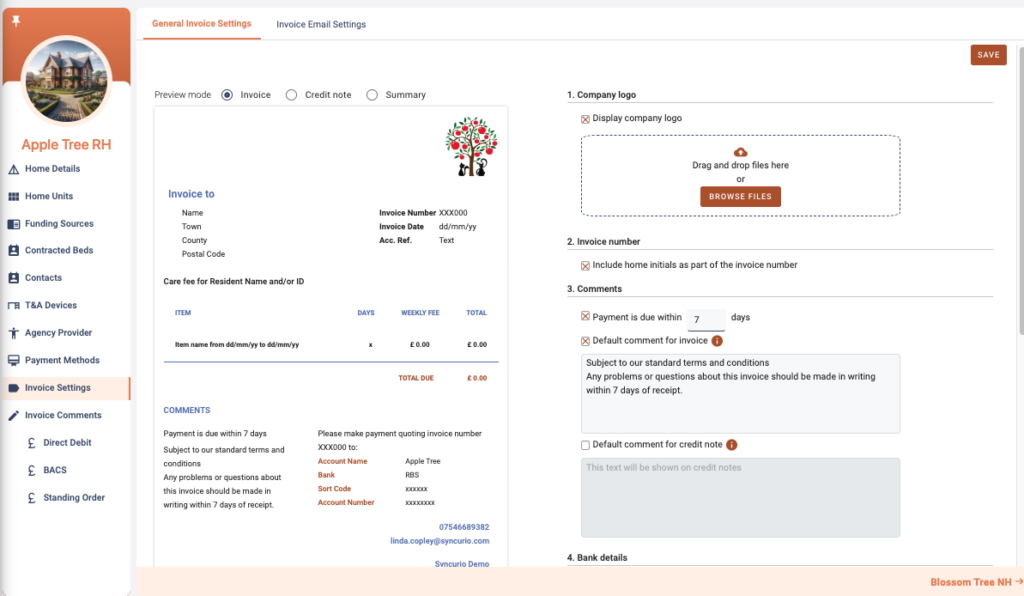
Syncurio has developed a holiday-pay calculator to help you see exactly where you stand, and before April 2027 does it for you.
Book a demo and we’ll show you how Syncurio calculates regular-overtime holiday pay for your rota. Request your demo.
This article on calculating overtime in holiday pay is general information, not legal advice. Enforcement timings and FWA powers are subject to government implementation – confirm current dates and obligations before relying on them.